PL-108 · Practical build-along
Build Your First Practical Ebook with AI — Step by Step
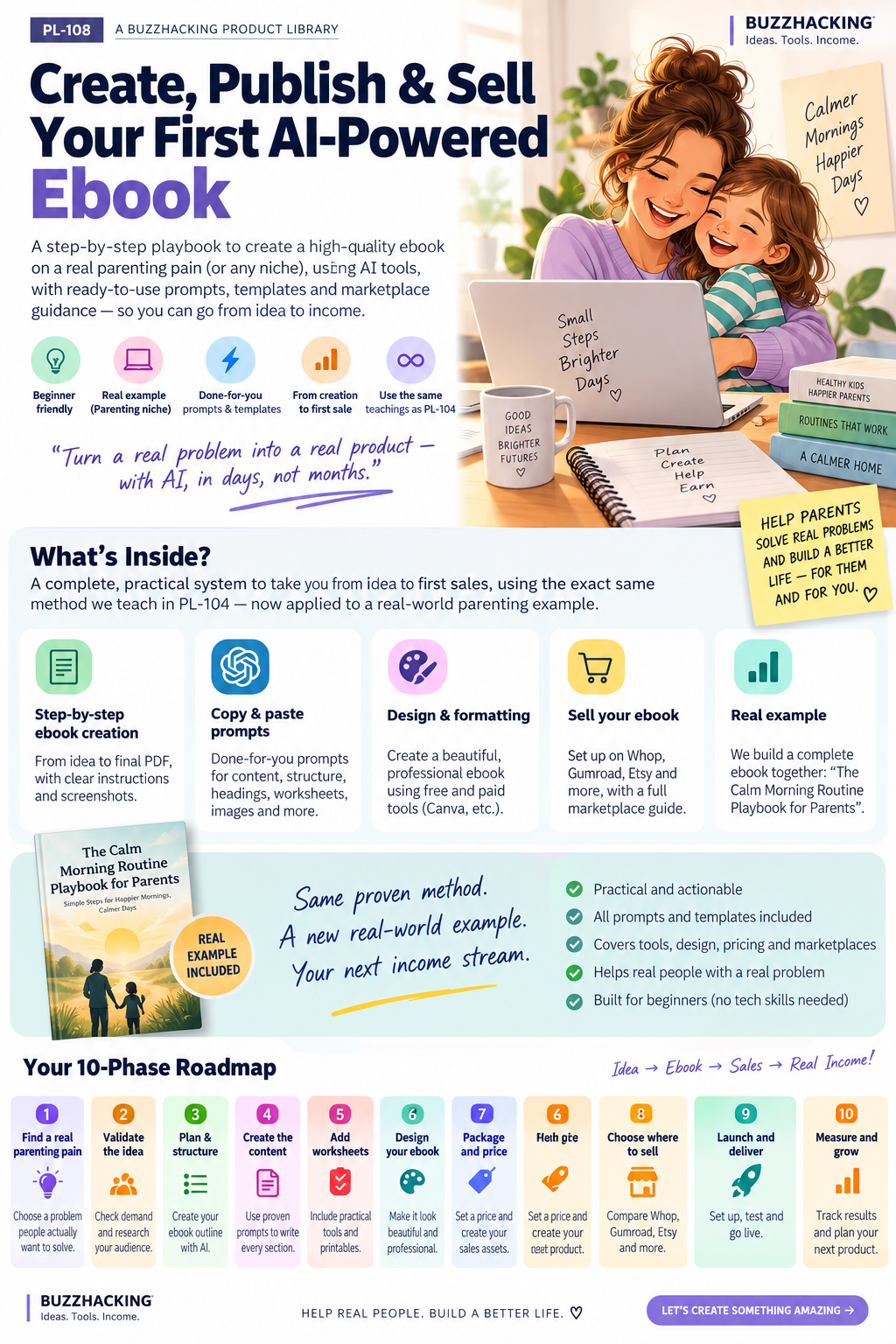
Follow one complete product from a real problem to researched content, copy-paste prompts, worksheets, explanatory visuals, a finished ebook, marketplace setup and buyer delivery.
Uses the same implementation principles as Create & Sell Your First Digital Product with AI — now applied end to end.
$49 one-time USD
Get the Build-Along — $49The gap
You understand the framework. Now build one with us.
Theory can make sense while the next action remains unclear: which prompt to run, what file to save, which tool to use next, how to check quality and where to sell the finished product. This build-along follows those decisions in sequence.
PL-104 showed you the system. PL-108 lets you build alongside us.
What we build · Fictional worked example
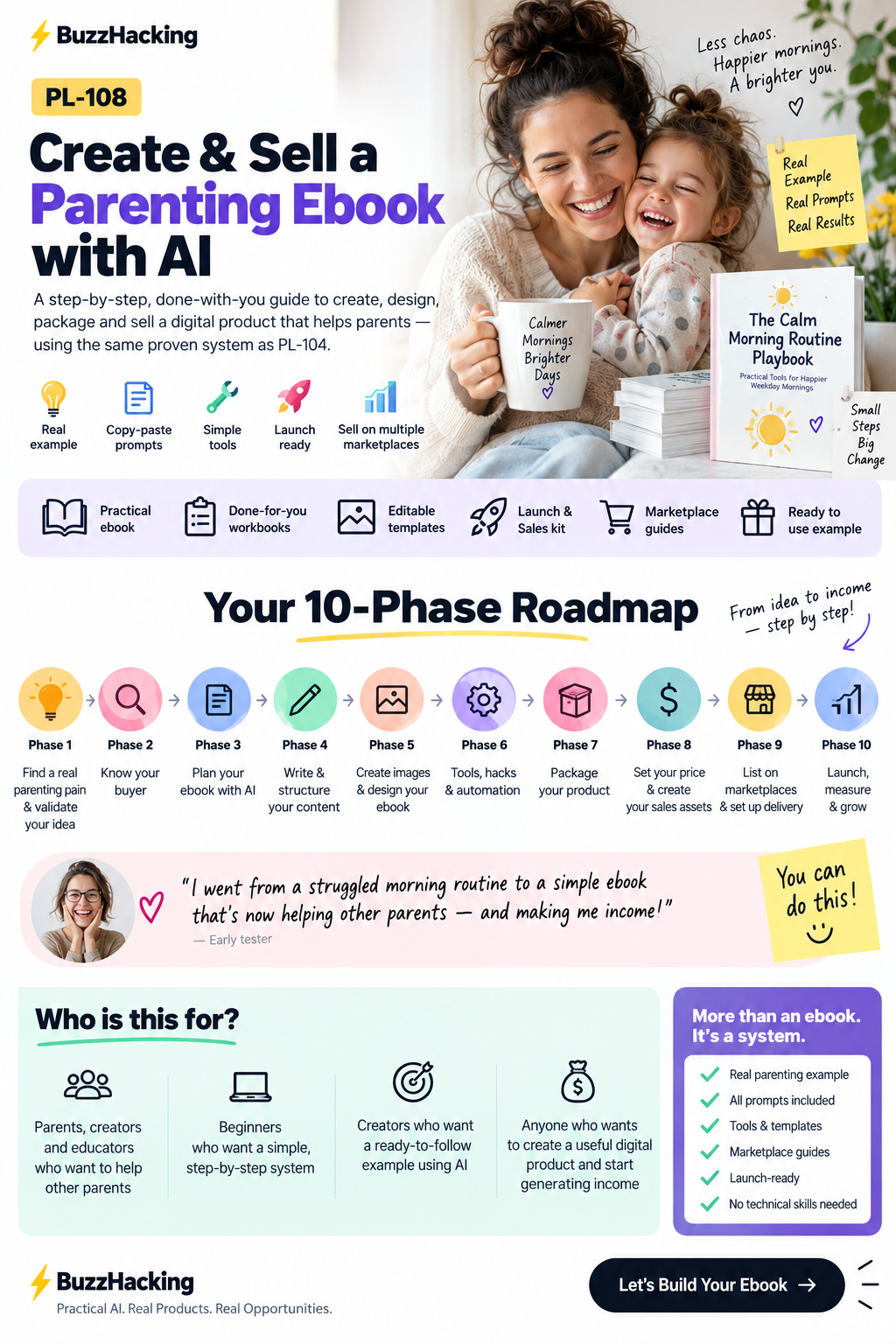
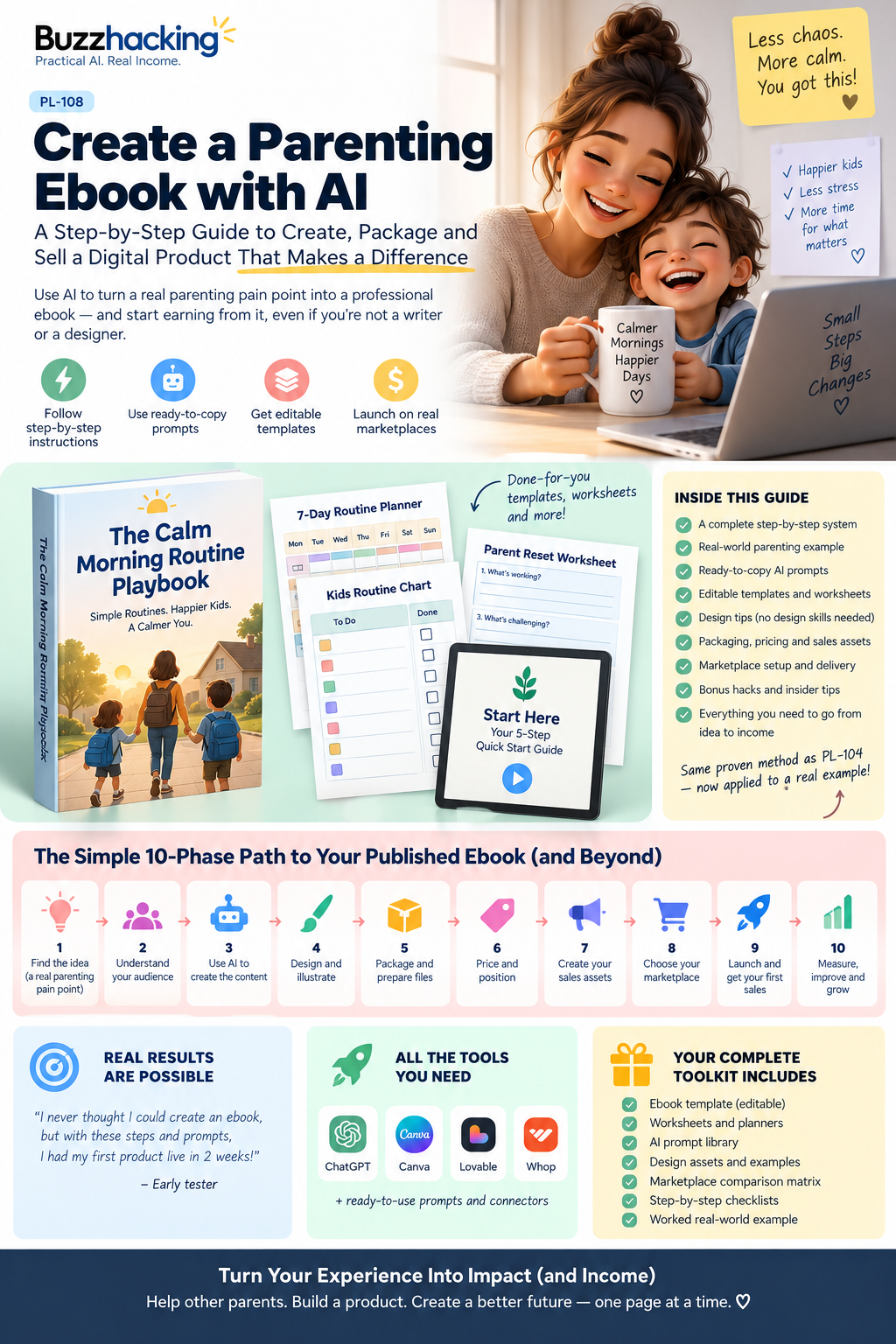
The Calm Morning Routine Playbook
One running parenting example demonstrates the production method throughout the guide and workbook. It is fictional — not clinical advice, a customer result or proof of demand.

- 01
Real pain
- 02
Evidence
- 03
Product spec
- 04
Source pack
- 05
Outline
- 06
Prompt chain
- 07
Worksheets
- 08
Visuals
- 09
Design
- 10
QA
- 11
Package
- 12
Price
- 13
Marketplace
- 14
Checkout / delivery
- 15
Launch / measure
Exactly what the buyer gets
A written build-along. A practical workbook.
The approved package includes the resources below. Prompts, examples, diagrams and selection guidance live inside the guide or workbook unless stated otherwise.
- 01
Practical build-along guide
37 pages following one practical ebook from problem research to finished product, marketplace setup and buyer delivery.
- 02
23 copy/paste production prompts
Embedded in the guide at the relevant steps — not a separate prompt pack.
- 03
Ebook Production Workbook
Tabs: Start, Idea Evidence, Alternatives, Product Spec, Sources Claims, Outline, Chapter Tracker, Image Manifest, Marketplace and QA.
- 04
Worked parenting example throughout
The fictional Calm Morning Routine Playbook demonstrates the method inside the guide and workbook; it is not a separate parenting pack.
- 05
Explanatory diagrams
Workflow, prompt chain, and traffic / sales-page / checkout / delivery architecture explained inside the guide.
- 06
Tool + connector map
Guidance on where ChatGPT, research, design, visuals, optional tools and seller platforms fit.
- 07
Design and QA process
Approve the content before layout, audit instructions and claims, then test the buyer experience.
- 08
Marketplace + delivery selection process
Choose a suitable route, prepare the offer and check how buyers receive and use the correct files.
The prompt chain
One job per prompt. Evidence before prose.
Start with sources, pass the approved output into the next step and preserve UNKNOWN rather than filling gaps. A prompt chain makes each decision easier to inspect.
- 01
Extract
Pull evidence from authorized sources. Keep gaps visible.
- 02
Plan
Turn the source pack and product spec into a useful outline.
- 03
Draft
Write one defined section or asset at a time.
- 04
Compress
Remove repetition without losing meaning or instructions.
- 05
Reader QA
Check whether a suitable reader can complete the task.
- 06
Targeted revision
Fix identified weaknesses without rewriting settled facts.
Tool stack
Use the smallest stack that finishes the job.
- ChatGPT
- Synthesis, drafting, QA and files
- Web research
- Current sources and alternatives
- Gamma
- Layout after content is approved
- Image generation
- Original explanatory visuals
- Higgsfield
- Optional specialized commercial visuals
- AccurateScribe
- Optional authorized voice-note source
- Lovable
- Branded sales page when useful
- Seller / delivery platform
- Checkout and buyer access
Tool and connector guidance is included; third-party tools, accounts, subscriptions and usage costs are not. Optional tools are not prerequisites.
Implementation hacks
Small controls that keep the build coherent.
Canonical context file
Keep the buyer, problem, scope and settled facts in one reference.
Source-first prompting
Supply the source pack before asking for content.
Prompt chains
Give each prompt one job and carry its output forward.
Blank + completed example
Compare the workbook workspace with the running worked example.
Visual manifest
Record the purpose, source and placement of each visual.
Visual style lock
Set one consistent style before producing more images.
Claim map
Connect factual claims to sources or mark them unresolved.
Instruction audit
Check that every action has the inputs and steps it needs.
Fresh-folder test
Open the package without your working files and check completeness.
Thumbnail test
Check that the offer and cover are legible at listing size.
Content master separate from design
Keep editable approved content outside the layout tool.
Freeze facts before design
Settle claims, numbers and instructions before styling pages.
Support-load design
Anticipate buyer questions in the files and first-step instructions.
UNKNOWN stays UNKNOWN
Do not turn missing evidence into a confident invented answer.
One running example
Follow the same fictional product through every production stage.
Derive launch content from the finished product
Use the completed product, not speculative promises, to explain the offer.
Marketplace / delivery
Finish with somewhere people can actually buy it.
Traffic brings people to the offer. The sales page explains it. Checkout takes payment. Delivery provides the correct files and access. These are distinct jobs, even when one platform handles several.
All-in-one seller platform
Compare routes such as Whop, Gumroad or Payhip for sales, checkout and delivery needs.
Discovery marketplace
Etsy when appropriate, Amazon KDP for genuine book publishing, or Creative Market for suitable design assets. Match the format and platform rules.
Branded sales page + checkout
Your own site explains the offer; a suitable seller checkout handles payment and buyer delivery.
Listing is not demand proof. Start with one primary route, measure, then expand.
QA / finish line
Done means a buyer can use it without you.
The product you build is only done when a suitable buyer can complete the whole journey — without the creator standing beside them.
- Discover the offer
- Understand what it does
- Pay through the chosen checkout
- Receive the correct files
- Know what to do first
- Complete the main task
FAQ
Before you build along
Is this another theory ebook?
No. It is a build-along showing the production process end to end.
Do I need PL-104 first?
No, but PL-104 is the broader first-product framework; PL-108 goes deeper into producing a practical ebook.
Do I need design skills?
No. It shows a content-first design workflow and tool choices.
Does it only work for parenting?
No. Parenting is the worked example; the production method is reusable for other low-risk practical niches.
Is it a video course?
No. It is a practical written guide and workbook, with embedded prompts, a worked example and diagrams.
Where can I sell the product I build?
The guide helps compare an all-in-one seller route, discovery marketplaces, and your own sales-page + checkout route.
Does BuzzHacking provide the third-party tools?
No. The guide shows how and where tools fit; third-party accounts and subscriptions are separate.
Build Your First Practical Ebook with AI
Practical build-along + workbook
$49 one-time (USD)
Get the Build-Along — $49